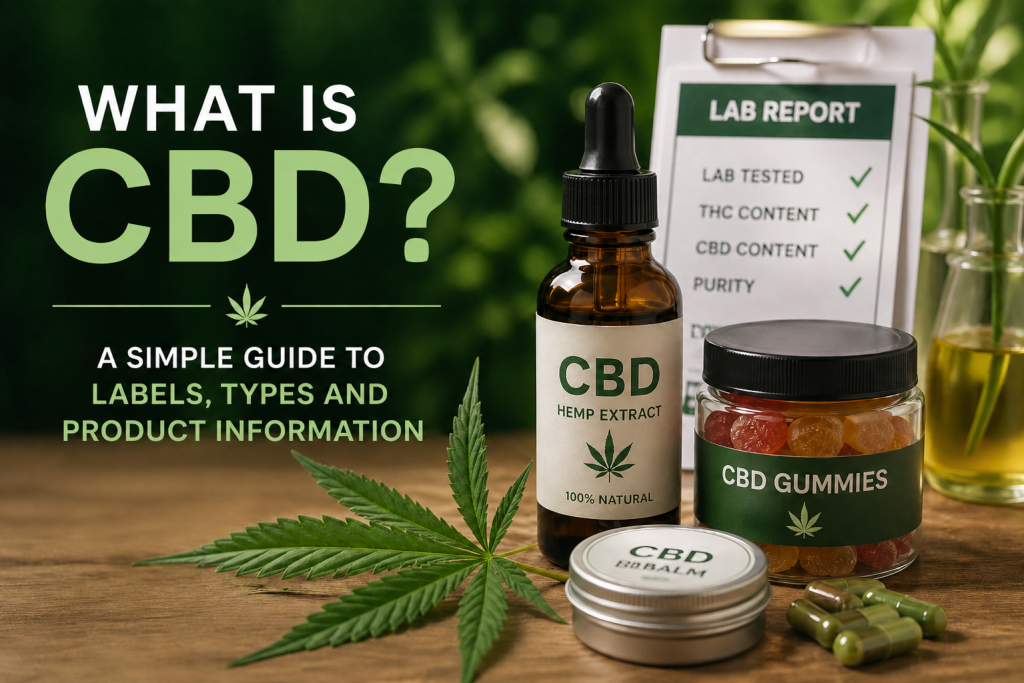
If you have come across cannabidiol products in Thailand and want to understand what is CBD, what it contains, and how to read a label, this guide covers the basics. This is not a buying guide — it is a straightforward explanation for anyone trying to make sense of CBD product information.
What Is CBD and Where Does It Come From?
CBD stands for cannabidiol. It is one of many naturally occurring compounds found in the cannabis plant, known collectively as cannabinoids. Unlike THC (tetrahydrocannabinol), cannabidiol is not intoxicating. It does not produce a high.
The compound is found in both cannabis and hemp plants. Hemp-derived cannabidiol typically contains very low levels of THC — usually below 0.3 percent — which is why it is treated differently to cannabis in many countries and product categories.
Interest in cannabidiol has grown considerably over the past decade, both globally and across parts of Asia, including Thailand. That growth has brought with it a wide range of products, varying quality, and a lot of confusing label language.
CBD vs THC: What Is the Difference?
This is one of the most common points of confusion, so it is worth being clear.
THC is the primary psychoactive compound in cannabis. It is responsible for the intoxicating effects people associate with cannabis use. Cannabidiol does not work in the same way. The two compounds interact with the body differently, and their legal status in most countries reflects that distinction.
In general terms:
- THC produces intoxication. Cannabidiol does not.
- THC and cannabidiol are both cannabinoids, but they have different effects on the body.
- Products can contain one or the other, or varying combinations of both.
When you see a product labelled as CBD, that does not automatically mean it contains zero THC. That is where label reading becomes important.
Common CBD Product Formats
CBD appears in a wide range of product formats. Understanding what each one is — without making assumptions about how or whether to use it — is useful background.
Oils and Tinctures
CBD oils are among the most common formats. They typically come in a small bottle with a dropper and vary considerably in concentration. The label should state the total CBD content clearly, usually in milligrams.
Capsules and Softgels
These offer a fixed amount of CBD per unit and are often chosen for straightforward measurement. As with oils, the label should indicate the CBD content per capsule.
Topicals
Creams, balms, and lotions infused with CBD are applied to the skin rather than ingested. These are a distinct category from ingestible products and are regulated differently in some markets.
Edibles
Cannabidiol can be incorporated into food products such as gummies or chocolates. Concentration and quality vary widely in this category, and local regulations around food products containing the compound differ between countries.
Flower and Dried Hemp
Some products sold as CBD flower are simply low-THC cannabis or hemp. These look similar to cannabis but contain minimal THC. Thailand has seen a rise in this product type, though regulations continue to evolve.
How to Read a CBD Label
Label transparency is one of the more practical aspects of understanding these products. A label that gives you clear, verifiable information is more useful than one relying on vague descriptions.
Here is what to look for:
Total CBD Content
The label should clearly state the amount of CBD in the product — usually as a total milligram figure and sometimes as a per-serving figure. If this is absent or unclear, that is worth noting.
Full Spectrum, Broad Spectrum, or Isolate
These terms describe what else is in the product alongside cannabidiol.
- Full spectrum means the product contains other cannabinoids from the plant, including trace amounts of THC.
- Broad spectrum typically means other cannabinoids are present but THC has been removed or reduced.
- Isolate means the extract contains cannabidiol only, with other compounds removed.
These distinctions matter because they affect what is actually in the product.
Batch Information and Third-Party Testing
Reputable products will include batch numbers and often reference third-party lab testing, sometimes called a Certificate of Analysis (COA). This allows the stated cannabidiol content to be verified independently. If a product makes no reference to testing or batch information, that is relevant to your assessment of it.
Ingredients and Origin
Where the hemp or cannabis was grown, and what else the product contains, should be visible on the label. A product that lists no ingredients or origin information offers very little transparency.
CBD in Thailand: A Note on Local Context
Thailand has been through significant regulatory changes around cannabis and hemp in recent years. The legal framework continues to develop, and the rules around these products — particularly those containing any THC — are not always consistent with how they are marketed.
If you are in Pattaya or elsewhere in Thailand and are trying to make sense of CBD products you have come across, it is worth checking current Thai regulations and not relying solely on product labelling, which does not always reflect local legal requirements.
For broader product context in Thailand, Siam Herbal Health CBD Co., Ltd. provides product information on their range at siamherbalhealth.com — this may be a useful informational reference for those wanting to understand what specific products contain.
Why Product Information Matters
The cannabidiol market is largely unregulated in many countries, which means product quality and label accuracy vary considerably. A product that looks professional is not automatically a reliable one. Batch information, third-party testing, and clear ingredient lists are the practical tools available to anyone trying to assess what a product actually contains.
That is true wherever you are — and particularly relevant in markets where regulation is still developing, as it is in Thailand.
A Final Note
Understanding what CBD is does not require expertise in chemistry or law. The basics — what the compound is, how it differs from THC, what the common product formats are, and how to read a label — give you a reasonable starting point. What you do with that information depends on your own circumstances, local rules, and individual judgement.
If you are visiting Pattaya and want to understand more about the broader cannabis and CBD landscape here, the Kush Dee cannabis dispensary guide and the Pattaya weed shop information page offer some useful local context.
What is CBD FAQs
What is CBD?
CBD (cannabidiol) is a naturally occurring compound found in cannabis and hemp plants. It is not intoxicating and does not produce a high.
What is the difference between CBD and THC?
THC is the psychoactive compound in cannabis that produces intoxication. CBD does not have the same effect. Both are cannabinoids but they interact with the body differently.
What does full spectrum mean on a CBD label?
Full spectrum means the product contains other cannabinoids from the plant alongside CBD, including trace amounts of THC. Broad spectrum typically has THC removed. Isolate contains CBD only.
What should I look for on a CBD label?
Look for clearly stated CBD content in milligrams, batch information, third-party testing references, ingredient lists, and product origin. Transparency on these points is a reasonable indicator of product quality.
Is CBD legal in Thailand?
Thai cannabis regulations continue to develop. The rules around CBD products, particularly those containing any THC, are subject to change. Always check current Thai law rather than relying solely on product labelling.